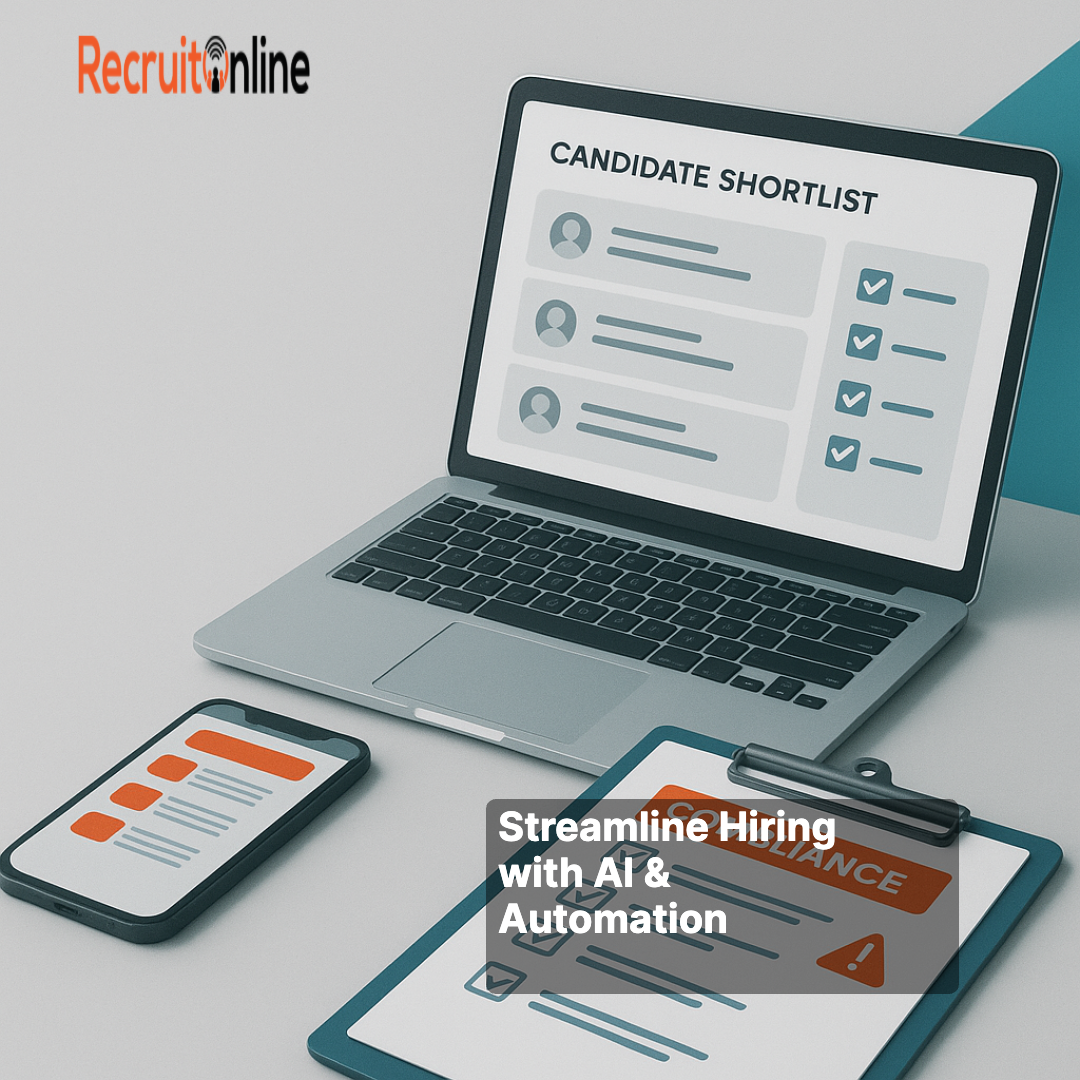
How to Use AI and Automation to Streamline Hiring Workflows

Explore practical ways recruitment teams can apply AI-assisted matching and automation to reduce manual tasks, improve candidate engagement, and speed up hiring. Includes checklists and examples relevant across staffing, healthcare, construction and manufacturing.

January 11, 2026

How to Use AI and Automation to Streamline Hiring Workflows

Hiring teams face increasing pressure to fill roles quickly while managing complex workflows, compliance and candidate experience. AI and automation can help reduce manual admin and improve outcomes, but only when applied thoughtfully.

This article explains practical steps recruitment agencies and in-house teams can take to introduce AI-assisted matching and workflow automation. It includes examples that address common pain points like manual candidate sourcing, compliance checks and communication delays.

Understanding AI and Automation in Hiring

AI-assisted hiring tools do not replace human judgement. Instead, they help prioritise candidates and automate routine tasks, allowing recruiters to focus on relationship-building and decision-making.

Automation triggers workflow steps based on events, such as sending reminders or updating candidate status. Together, these technologies reduce repetitive admin and improve speed-to-hire.

Key Benefits to Aim For

  • Save recruiter hours by automating manual data entry, follow-ups and candidate matching.
  • Improve candidate engagement with mobile-first communication and faster responses.
  • Reduce compliance risk through automated credential tracking and audit-ready workflows.
  • Gain better visibility with consolidated dashboards showing pipelines and margins.

Step 1: Identify Manual Bottlenecks

Start by mapping your current hiring process to find where manual effort causes delays or errors. Common areas include:

  • Candidate sourcing and shortlisting
  • Credential and licence verification
  • Scheduling interviews and shift confirmations
  • Onboarding paperwork and compliance tracking

Engage recruiters, compliance leads and hiring managers to understand pain points and priorities.

Step 2: Introduce AI-Assisted Candidate Matching

AI can help surface the most relevant candidates faster by analysing job requirements and candidate profiles. To implement effectively:

  • Use AI suggestions as a starting point, not a final decision.
  • Regularly review and adjust AI parameters based on recruiter feedback.
  • Ensure data quality by maintaining up-to-date candidate records.

Example checklist:

  • Define key job criteria for AI matching
  • Train recruiters on interpreting AI-assisted shortlists
  • Monitor AI matching accuracy and adjust as needed

Step 3: Automate Communication and Workflow Steps

Reduce time spent on routine emails, SMS reminders and status updates by setting up automated sequences:

  • Send interview invites and confirmations automatically.
  • Trigger compliance reminders for expiring credentials.
  • Update candidate status and notify hiring teams instantly.

Automation checklist:

  • Map common communication touchpoints
  • Create templates for emails and SMS
  • Configure triggers for workflow steps

Step 4: Improve Candidate Experience with Mobile Tools

A mobile-first candidate experience increases application rates and responsiveness:

  • Provide candidates with an app or mobile portal to manage applications and schedules.
  • Enable two-way messaging for quick updates.
  • Allow candidates to upload documents and update availability on the go.

Candidate experience tips:

  • Keep mobile interfaces simple and intuitive.
  • Ensure notifications are timely but not overwhelming.
  • Collect feedback regularly to improve usability.

Step 5: Integrate Compliance and Audit Workflows

Automated credential checks and secure document storage help reduce compliance risk:

  • Track expirable licences and certifications with alerts.
  • Maintain auditable logs of candidate verification steps.
  • Use e-signatures and digital onboarding forms to speed activation.

Compliance checklist:

  • Identify mandatory credentials per role and region
  • Set up automated expiry reminders
  • Ensure secure storage with audit trails

How RecruitOnline Supports AI and Automation

RecruitOnline offers an integrated platform combining ATS and CRM with AI-assisted matching and workflow automation designed by recruiters for recruiters. Key features include:

  • AI-powered candidate ranking that helps prioritise relevant profiles with human oversight.
  • Automated email and SMS communication sequences triggered by hiring events.
  • Mobile candidate app for managing applications and schedules.
  • Compliance workflows with expirable credential tracking and audit-ready documentation.

This unified approach reduces admin overhead and improves hiring speed while maintaining compliance and candidate engagement.

Next Steps

  • Review your current hiring workflows to identify manual tasks suitable for AI and automation.
  • Pilot AI-assisted matching with a small team and gather feedback.
  • Explore mobile engagement options to improve candidate responsiveness.

Applying AI and automation thoughtfully can free recruiters from repetitive tasks and help your team focus on placing great people faster and more confidently.

Trusted by 1,000s of Recruiters

Extrastaff logo
Dynamic Staffing Logo
Job Connect logo
ReadyForce logo
Workhorse Staffing logo
Total Recruitment logo
Synaco by Synergie logo
SRG logo
Stafford logo
ReadyForce logo
Tetris logo
KiwiStaff logo
Onestaff logo
HRM logo
Canstaff logo
Coverstaff logo
Agstaff logo
RPR Trades logo

Founded in 2017, RecruitOnline combines 20+ years of recruitment expertise to deliver a tailored all-in-one platform built by recruiters for recruiters in Blue Collar and Healthcare. Integrating ATS, CRM, and multi-channel recruitment marketing, it streamlines hiring with seamless onboarding, intelligent workflows, built-in compliance, and AI-driven insights. Optional add-ons like the Candidate Mobile App, RecruitChatBot, and PinvoiceR further enhance efficiency by simplifying scheduling, automating tasks, and managing payroll and invoicing.